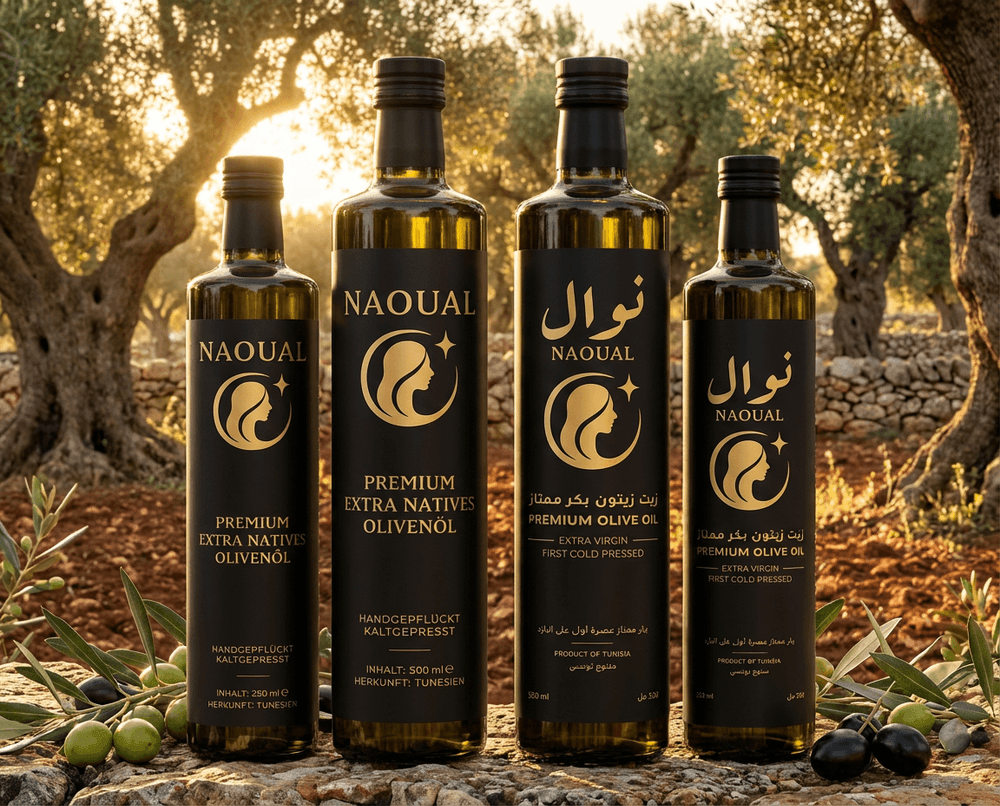
You open a bottle of NAOUAL, pour a spoonful, and taste it. Suddenly, you feel a distinct tingle—or even a slight burn—at the back of your throat. That cough is the ultimate proof that you bought the right bottle.
You open a bottle of NAOUAL, pour a spoonful, and taste it. Suddenly, you feel a distinct tingle—or even a slight burn—at the back of your throat. You might even cough.
Did you buy a bad bottle? Absolutely not. In fact, that cough is the ultimate proof that you bought the right bottle.
In the world of olive oil sommeliers, this sensation is prized. It is the hallmark of a high-quality, high-antioxidant Extra Virgin Olive Oil. Here is the science behind the "sting."
1. Meet Oleocanthal: Nature's Ibuprofen
That peppery sensation comes from a specific polyphenol called Oleocanthal.
- The Name: It literally derives from the Greek oleo (olive), canth (sting), and al (aldehyde).
- The Function: Oleocanthal is a potent anti-inflammatory agent. Research shows it mimics the effects of Ibuprofen, helping to reduce inflammation in the body.
2. The "Two-Cough" Standard
Connoisseurs often rate oils by whether they are "one-cough" or "two-cough" oils.
- Tunisian Strength: Because Tunisia's sun-drenched climate stresses the olives (in a good way), they produce higher levels of polyphenols to protect themselves.
- The Experience: When you taste NAOUAL, you aren't just tasting fat; you are tasting the plant's immune system. That "kick" is the flavor of health.
3. Don't Fear the Bitterness
Real olives are bitter. If an oil tastes purely like butter with zero bitterness or pungency, it is likely refined, old, or diluted.
The NAOUAL Promise: We embrace the robust profile of the Tunisian olive. We preserve that peppery finish so you know exactly what you are getting: 100% active, healthy juice.
Learn to love the burn. It means it's working.